Why Gardening Still Belongs in Schools
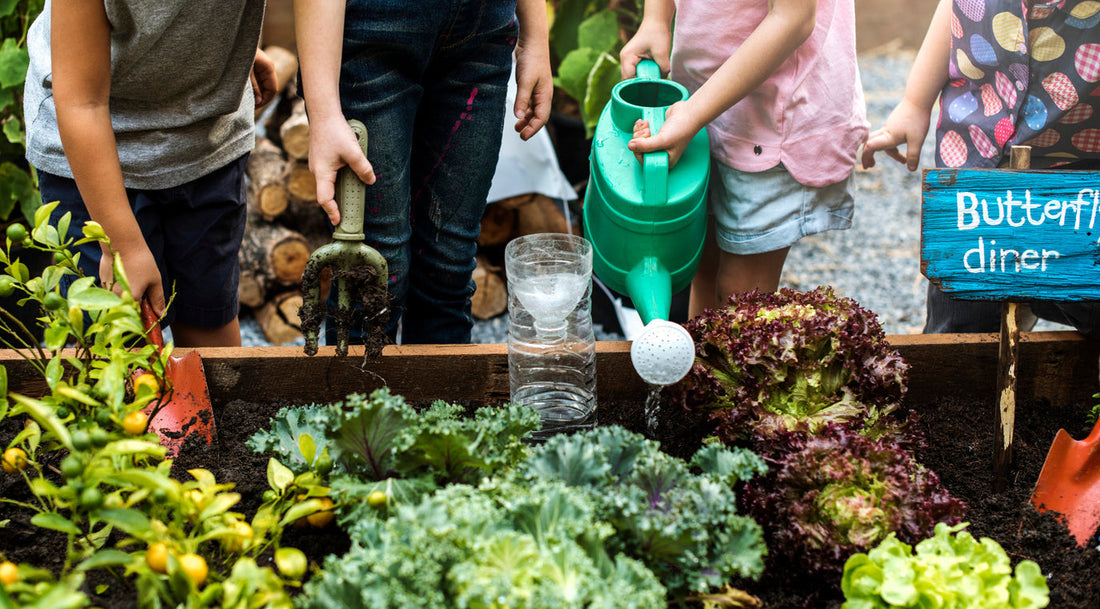
Here is why school gardening is still vital for UK children, and how modern schools can overcome space and weather barriers to make outdoor learning a reality.
Introduction
There was a time when school gardens were a familiar sight across rural Britain. In the 1950s and 1960s, many primary and secondary schools maintained their own vegetable plots. Children routinely learned about seasonal growing, composting, and crop rotation. Gardening wasn’t treated as an "extra" or a Friday afternoon distraction – it was woven directly into everyday school life.
Today, formal gardening lessons are far less common. With a packed national curriculum, strict academic targets, and shrinking budgets, practical outdoor skills have often been sidelined.
Yet, in an era dominated by screen time, rising mental health challenges, and a declining awareness of where food comes from, teaching the children how to grow their own food is more important than ever.
Here is why school gardening is still vital for UK children, and how modern schools can overcome space and weather barriers to make outdoor learning a reality.
Gardening in Schools: Then and Now
In post-war Britain, self-sufficiency and food production were still very much part of national consciousness. Campaigns such as 'Dig for Victory' encouraged families to grow their own produce, and that mindset carried into the following decades.
Many rural schools had dedicated vegetable plots and fruit trees within the grounds, as well as practical gardening lessons and strong links with local farming communities. Children didn’t just learn about nature; they got their hands dirty managing soil, composting, sowing seeds, and harvesting crops to be used in the school kitchen. Gardening was seen as a practical skill with real-world value, not simply a pastime.
Over time, however, a shift occurred. Increasing academic demands, reduced outdoor space (particularly in urban areas), and health and safety concerns have meant that gardening in schools has slowly faded into the background.
Fortunately, the tide is turning. Thanks to initiatives like the RHS Campaign for School Gardening, lots of UK schools are rediscovering the joy of the outdoors. Some schools now run lunchtime gardening clubs, maintain small allotments, or partner with community groups to give pupils access to outdoor growing spaces. These initiatives show that the appetite for green-fingered learning hasn’t disappeared – it has simply taken on new forms.
5 Incredible Benefits of Gardening for School Children
Getting pupils out of the classroom and into the soil does far more than teach them where carrots come from. It actively supports their physical, mental, and academic development.
1. Connecting Children with Nature

Modern childhood is increasingly screen-based, and time spent outdoors has declined significantly over recent decades. Gardening offers a structured, purposeful way to reconnect children with the natural world.
By planting seeds and watching them grow, children develop a profound respect for the natural world. They learn patience, observation, and a first-hand understanding of local ecosystems – lessons that simply cannot be replicated on a tablet.
Research from organisations such as the Royal Horticultural Society has shown that school gardening can improve wellbeing, resilience, and even academic engagement.
When children spend time outdoors, stress levels decrease and mood improves – benefits that are just as relevant in the classroom as they are in adulthood.
2. Teaching Practical Life Skills
Knowing how to grow food is a fundamental life skill. Even small-scale gardening gives children hands-on experience in preparing soil, sowing seeds, and caring for seedlings as they develop.
It also helps them understand weather patterns and seasonal cycles, while encouraging them to solve practical problems as they arise. Working together in a garden setting further supports collaboration and teamwork.
These skills build confidence and independence. In a world where convenience often dominates, growing food from scratch provides a powerful sense of achievement.
3. Learning About Nutrition and Healthy Eating
One of the most effective ways to encourage healthy eating is to involve children in growing food themselves. Children are far more likely to eat vegetables they have grown themselves.
School gardening can also support classroom learning around nutrition and balanced diets, and sustainable food systems. It provides a practical context for understanding where food comes from and how it contributes to a healthy lifestyle.
Seeing how carrots grow underground or how strawberries develop from flowers helps make food tangible and real, rather than something that simply appears on their lunch trays.
4. Supporting Mental Health and Wellbeing
Gardening has well-documented therapeutic benefits. For children who struggle to sit still or feel anxious in a traditional classroom setting, the garden is a space of calm. The physical rhythm of digging, planting, and watering reduces stress, boosts mood, and builds emotional resilience.
Gardening also encourages mindfulness, focus, and teamwork through hands-on, purposeful activity. For some pupils, the garden becomes a space of quiet confidence – somewhere they can succeed in ways that written tests may not always capture.
5. Encouraging Environmental Responsibility
Today’s children will inherit a world facing climate change and biodiversity loss. Teaching gardening is a perfect hands-on way for teaching sustainability.
Through water conservation, organic pest control, and composting, pupils learn that:
- Soil health matters
- Pollinators are essential
- Seasonal eating reduces environmental impact
- Waste can be reduced and reused
These lessons help nurture environmentally conscious young people who understand the impact of their choices on the world around them.
Making Gardening Possible in Modern Schools
While not every UK school has extensive grounds, gardening doesn’t require acres of land. Creative solutions can make it accessible in both rural and urban settings.
Small Allotment Areas
A corner of the playground or field can easily be transformed into a small allotment area with raised beds, with even a compact space capable of growing salads, herbs, or root vegetables.
School Gardening Clubs
Running an after-school or lunchtime gardening club is a fantastic way to engage passionate students without placing additional pressure on the formal curriculum. These clubs are a great way to involve parents and local community volunteers to share the workload.
Container and Rooftop Growing
In urban schools, where outdoor space is at a premium, using containers, planters or rooftop spaces is a great way to create productive gardens. Herbs on windowsills, vertical growing systems, and compact cloches can all let you grow food in small spaces.
School Polytunnels for Year-Round Growing
A sturdy polytunnel creates a sheltered outdoor classroom that can be used all year round – even in the depths of a rainy January. A polytunnel protects crops from unpredictable weather and allows a wider range of crops to be cultivated year-round, supporting learning across the academic year. It allows classes to sow seeds much earlier in the spring and harvest crops much later into the autumn term.
Plus, it provides a dry, safe space for cross-curricular lessons, linking science, maths, geography, and art directly to the natural world.
A school polytunnel really takes things to the next level.
Why Gardening Should Remain Part of School Life
Education is not only about exams – it’s about preparing children for life. Gardening supports physical health and mental wellbeing, environmental understanding, and practical competence, helping to develop skills that extend well beyond the classroom.
Reintroducing or strengthening gardening in schools can encourage outdoor activity and promote healthy eating. In addition, it can build lifelong skills and strengthen community connections. It offers a wide range of benefits that support both personal development and broader awareness of the world around us.
Education has evolved since the 1950s and 60s, but a child’s fundamental need to connect with the earth remains unchanged.
By investing in school gardens – whether that’s a simple collection of playground pots, a community allotment, or a dedicated school polytunnel – we are doing more than teaching children how to grow veg. We are planting seeds of confidence, resilience, and environmental respect that will stay with them for the rest of their lives.


