How Long Does a Polytunnel Last?
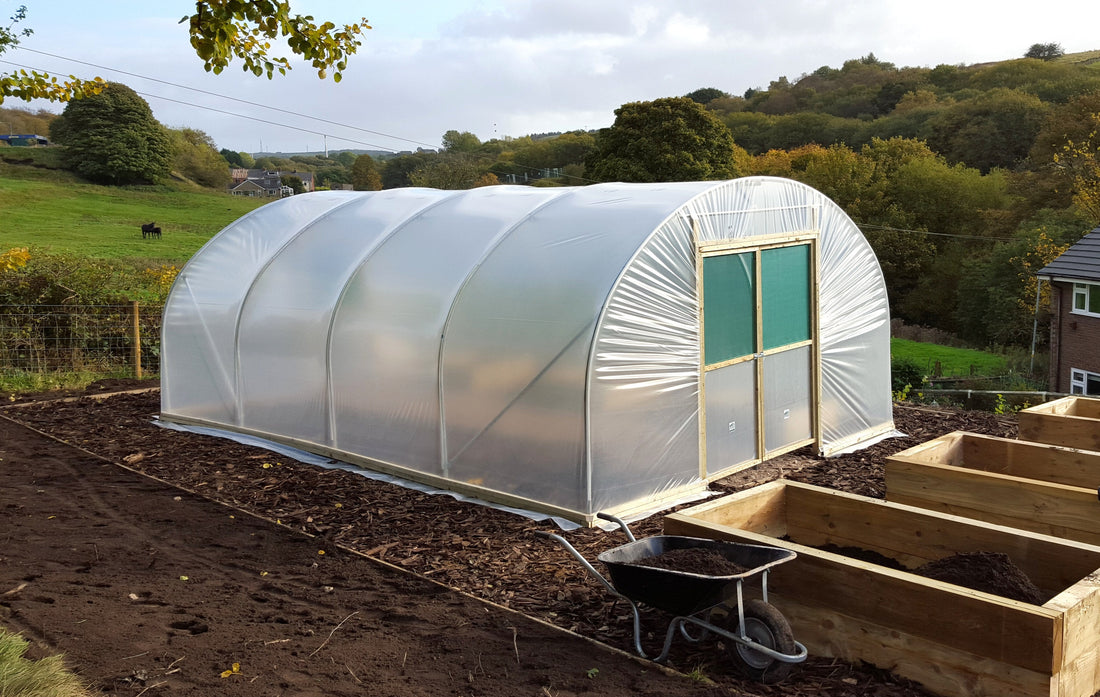
Investing in a polytunnel is one of the most effective ways to extend your growing seasons, protect vulnerable crops, and increase yields. So, when you make the decision to invest in a polytunnel, you want to know that it is going to last.
Introduction
Investing in a polytunnel is one of the most effective ways to extend your growing seasons, protect vulnerable crops, and increase yields. So, when you make the decision to invest in a polytunnel, you want to know that it is going to last.
‘How long does a polytunnel last?’ is a question we are regularly asked at Premier Polytunnels, particularly by customers who are looking at a polytunnel for the first time. After all, nobody wants to spend their hard-earned money on a structure that needs replacing after just a few years.
The good news is that a high-quality polytunnel can last for many years. We manufacture our frames from Z35 high tensile galvanised steel which can last 20 years or more when properly built and maintained. The polythene cover will typically last 7-10 years, depending on the type of cover, the conditions it is exposed to, and how well it is fitted and maintained.
Importantly, when the polythene cover eventually reaches the end of its useful life, you do not need to replace the whole polytunnel. A replacement cover is considerably cheaper than buying a new structure.
So, how long can you really expect your polytunnel to last?
How long does a polytunnel frame last?
The framework is the long-term part of your polytunnel.
Here at Premier Polytunnels, our frames are made from Z35 high tensile galvanised steel, giving you a strong and durable framework designed to cope with the British weather.
The galvanising provides protection against corrosion, while the high tensile steel gives the frame the strength and rigidity it needs to withstand harsh weather conditions without bending or breaking. Our polytunnels are also designed with larger diameter hoops than many other models, providing additional strength where it matters most.
With the right care and maintenance, you can expect a Premier polytunnel frame to last 20 years or more.
Of course, there are always variables and the exact lifespan depends on the conditions it is exposed to. A well-anchored polytunnel on a reasonably sheltered site will have a much easier life than one subjected to constant high winds, flying debris and heavy snowfall.
The way the tunnel is constructed is also important. Correct anchoring, properly fitted hoops, secure stabilisers, and a tensioned cover all contribute to the longevity of the structure.
This is why it’s worth taking some time to consider the location and construction of your polytunnel, helping you get the best possible results from your investment.
How long does a polytunnel cover last?
The polythene cover has a shorter lifespan than the steel frame, and this is completely normal. On average, a quality polythene cover will last between 7 and 10 years before it needs to be replaced.
How long a polytunnel cover lasts depends on the thickness and specification of the film you choose. Our covers are available in two thicknesses:
- Our 600 gauge/150 micron Thermal Anti Drip polythene comes with a 4-year warranty against UV degradation and an expected lifespan of 7-8 years. This polythene is supplied as standard with our garden range of tunnels.
- Our 720 gauge/180 micron Thermal Anti Drip polythene is available as an upgrade on our garden polytunnels and is supplied as standard with our commercial range of tunnels. It comes with a 5-year warranty against UV degradation and an expected lifespan of 8-10 years.
The biggest enemy of polythene is UV radiation from sunlight. Most modern polytunnel covers are manufactured with UV stabilising additives to slow down the degradation caused by sunlight. Even so, polythene gradually becomes less flexible and more brittle as it ages.
It is worth remembering that a stated cover lifespan is not a countdown clock. A cover in a sheltered garden may last considerably longer than one in an exposed location, while a poorly tensioned cover can suffer premature wear.
The good news is that replacing the cover is a relatively straightforward job and can give your polytunnel a new lease of life at minimal cost. Replacement covers are a normal part of owning a polytunnel, while the frame can remain in place, allowing you to enjoy many more years of use from your original investment.
What affects how long a polytunnel lasts?
There are several factors that can make a difference to the lifespan of your polytunnel:
Where is your polytunnel situated?
Think carefully about the location before you build.
A sheltered position is preferable, particularly if you live somewhere that regularly experiences strong winds. It’s also worth considering the surrounding trees and any overhanging branches when choosing the ideal position. Keeping the polytunnel clear of large branches can help protect the cover and reduce the risk of damage during storms.
Good positioning can also make the tunnel easier to use. Ideally, you want somewhere that receives plenty of sunlight and has good access, while avoiding unnecessary exposure to prevailing winds. Taking the time to choose the right location will help you get the most from your polytunnel for many years to come.
How well has the polytunnel been built?
The task of building a polytunnel should not be thought of as a little project or like putting up a tent.
We often describe building one as being a bit like “putting together giant Meccano”. Although our polytunnels are designed to be straightforward to construct, the job still needs to be done properly.
The frame needs to be securely anchored and all the components correctly fitted. This is particularly important in exposed, blustery locations, where an inadequately secured structure can be lifted or moved in strong winds.
For customers who prefer to leave the construction to us, we have in-house team who takes care of the entire build. By keeping construction in-house rather than outsourcing the work, we can maintain control over the quality of the build from start to finish.
How tightly has the cover been fitted?
This is one of the most important things when it comes to getting the maximum life from your polythene.
The cover should be as taut as possible. If it is fitted too loosely during construction, the wind can catch the excess polythene, causing it to flap against the framework. This creates unnecessary movement and friction, which can eventually lead to tears. A drum tight cover allows the wind to pass smoothly over the structure, helping to minimise movement and reduce the risk of damage.
When fitting a new cover, we recommend choosing a calm day. This isn’t just because it makes the job easier – once you unfold a large sheet of polythene, you effectively have a very large sail!
Cover Tensioning Tubes (on garden tunnels only) or Base Rails can also be used to help achieve and maintain good cover tension.
What is the weather like?
British weather can be unpredictable, and your polytunnel has to cope with everything from summer sunshine to winter storms.
UV exposure gradually degrades polythene over time, while strong winds can cause movement and friction if the cover is not correctly tensioned.
Your polytunnel deserves some attention when stormy weather is expected. Before a storm, check that doors and side vents are secure. A door that is allowed to blow around in the wind can create much greater stress than you might expect.
For particularly exposed, blustery locations, additional strengthening options can also be worthwhile. This is something we recommend considering when you first choose your tunnel, rather than waiting for the first serious storm.
Does snow affect how long a polytunnel lasts?
It can, particularly if heavy snow is left to lie on the roof.
Snow adds considerable weight to the structure, putting unnecessary strain on the frame and potentially causing the cover to stretch and sag. In areas where heavy snowfall is possible, it is sensible to keep an eye on the polytunnel during winter and remove significant build-ups as soon as possible.
Is a polytunnel more durable than a greenhouse?
Growers often compare polytunnels directly with traditional glasshouses when assessing durability. While both structures serve similar purposes, they are designed and age differently, making the question “Is a polytunnel more durable than a greenhouse?” difficult to answer with a simple yes or no.
A traditional greenhouse has a rigid structure and glass panels. While glass can last for many years, it is also vulnerable to breakage if it is hit by something or damaged.
A polytunnel, on the other hand, uses a strong galvanised steel frame with a flexible polythene covering.
The polythene will need replacing periodically, but this is one of the advantages of the polytunnel design. You are not replacing the entire structure when the cover reaches the end of its life – you are simply replacing the covering.
For many gardeners, this makes a polytunnel a very practical long-term option. You get a large, durable growing area for your investment, a robust steel framework, and a replacement cover that costs considerably less than a new polytunnel.
Is a polytunnel a good long-term investment?
We certainly think so!
A common misconception is that if a polytunnel cover has a lifespan of 7–10 years, the polytunnel itself only lasts 7–10 years. This isn’t the case.
The frame is the long-term investment. If you look after it properly, there is no reason why your steel framework shouldn’t remain in place for 20 years or more. When the cover reaches the end of its life, fitting a replacement cover gives the same underlying structure many more years of use.
It is also why the quality of the frame matters so much when you are comparing different polytunnels. A cheap tunnel may look like a bargain initially, but the diameter of the steel hoops, the anchoring system and the overall construction all affect how well it will stand up to years of British weather.
A well-designed, well-manufactured and well-built polytunnel is an attractive option for anyone looking to create a substantial growing area without the expense of constructing a permanent glazed structure. Whether you want to grow your own fruit and vegetables, extend the growing season or simply enjoy more protected growing space, a polytunnel is a sensible long-term investment.
It is also worth considering the wider benefits that come with that investment. A polytunnel protects plants from unpredictable weather, creates a more controlled growing environment and allows you to grow crops that may otherwise struggle outdoors in the UK.
Over many years of growing, that extra growing space can become an extremely valuable part of your garden or allotment.
How can you make your polytunnel last longer?
Getting 10 years or more out of your polythene cover comes down to proper installation and ongoing care. Here are our essential manufacturer tips to get the most from your polytunnel:
Install it correctly from the start. A well-anchored and properly assembled framework, together with a correctly fitted cover, are essential for lasting performance and durability.
Keep the cover properly tensioned. This is one of the most important things you can do. A taut cover will move less in the wind and is less likely to flap, rub and suffer unnecessary wear in windy conditions.
Use Anti Hot Spot Tape. This self-adhesive foam tape should be applied to the steel hoops before the polythene cover is fitted. It helps prevent degradation caused by friction and the build-up of heat in the framework, helping to prolong the life of the polythene cover.
Check the cover regularly. Keep an eye out for small tears, holes or areas where the polythene is rubbing against the framework. Small problems are much easier to deal with before they become large tears.
Repair small damage quickly. Don’t wait until a small tear becomes a large one. Suitable polytunnel repair tape can be used to repair minor damage and prevent it from worsening. With prompt repairs and proper care, there’s no reason why the cover shouldn’t last its full term.
Keep an eye on the weather. Secure doors and side vents during strong winds, and take action if heavy snow begins to build up on the roof.
Keep surrounding trees and branches under control. Overhanging branches can be a source of damage during high winds. A little pruning around the tunnel can save you a lot of trouble later.
Look after the frame. Although galvanised steel is designed to be durable, it is still worth checking the framework from time to time and making sure everything remains secure.
So, how long should you expect your polytunnel to last?
For a quality polytunnel, the answer is measured in decades, not just years.
The galvanised steel frame can last 20 years or more, while the polythene cover will typically last around 7–10 years, depending on the conditions.
Eventually, the cover will need replacing. That’s simply part of owning and maintaining a polytunnel, just as other parts of any long-term structure may wear out and need replacing over time.
The important thing is that you are not replacing the whole tunnel.
A good quality frame and cover, properly installed and looked after, can provide many years of reliable service. When the time comes, a replacement cover gives the polytunnel a new lease of life at a fraction of the cost of buying a completely new structure.
Here at Premier Polytunnels, we have been designing and manufacturing our polytunnels from our base in Lancashire for decades. We know that customers want a structure that is strong, practical and built to last – and that is exactly what we aim to provide.
After all, when you invest in a polytunnel, you want to be able to enjoy growing in it for many years to come.


