Storms in the UK: Protect Your Garden & Polytunnel
The UK is no stranger to unsettled weather. From frequent rain to powerful storms, gardeners must be prepared for a wide range of conditions throughout the year. Whether you’re growing in outdoor beds or under cover, understanding how often storms occur and how to protect your garden can make all the difference.
Introduction
The UK is no stranger to unsettled weather. From frequent rain to powerful storms, gardeners must be prepared for a wide range of conditions throughout the year. Whether you’re growing in outdoor beds or under cover, understanding how often storms occur and how to protect your garden can make all the difference.
How Many Days of Rain Does the UK Have Each Year?
Rain is a defining feature of the UK climate. On average, there are around 156 days of rainfall each year, meaning that nearly half the year sees some rain. This varies by region, with western and northern areas typically seeing more rain than the east and south.
For gardeners, this frequent rainfall can be both beneficial and problematic. While it supports plant growth and reduces the need for irrigation, it can also lead to waterlogged soil, poor root health, and an increased risk of flooding, especially during prolonged wet periods or storms.
How Many Storms Hit the UK Each Year?
Storms are a regular occurrence in the UK, particularly during autumn and winter when Atlantic weather systems are most active. The UK storm season begins in September and ends in August the following year, and data shows that typically there are 6-7 officially named storms per year.
What Counts as a Storm?
A storm is generally defined as a violent atmospheric disturbance involving combinations of:
- Strong winds
- Heavy rain
- Thunder and lightning
- Snow (in colder months)
These conditions are usually caused by intense low-pressure systems, which can rapidly develop and bring disruptive weather across large areas. It is usually the wind that causes the most structural damage, particularly to garden structures such as polytunnels.
Why Are Storms Named and Who Names Them?
Storm naming was introduced in the UK in 2015 to improve public awareness and safety. When a storm is expected to cause significant disruption – often triggering amber or red weather warnings – it is given a name to make it easier to communicate the risk.
The naming system is managed collaboratively by the UK Met Office, Ireland’s Met Éireann, and the KNMI, the Netherlands meteorological institute. Each year, a list of names is released in alphabetical order, alternating between male and female names. Many of these are suggested by members of the public.
Giving storms names helps ensure that warnings are taken seriously. It also makes it easier for people to track incoming weather and prepare accordingly.
How Gardeners Can Prepare for Storms
Storms can cause serious damage to gardens and growing structures but, with the right preparation, risks can be minimised.
How to Prepare Your Garden for Heavy Rain
Flooding is one of the most common risks during UK storms, particularly after periods of sustained rainfall. Preparing your garden in advance can make a significant difference in preventing long-term damage.
Good drainage is essential. Raised beds are especially useful in areas prone to waterlogging, as they allow excess water to drain away more effectively. It’s also important to regularly clear gutters, drains, and channels around your growing area, as blockages can quickly lead to standing water.
Positioning your polytunnel carefully is another key consideration. Avoid placing it in low-lying parts of your garden where water naturally collects. Adding mulch or ground cover can also help reduce soil erosion and protect plant roots during heavy rain.
If flooding is forecast, it’s worth taking extra precautions. Moving sensitive plants to higher ground and securing any loose items that could float or be displaced can help minimise damage and make recovery easier once conditions improve.
Protecting Your Polytunnel from Gale Force Winds
While heavy rain can cause problems, strong winds are often the most destructive element of a storm. Gusts can place significant strain on garden buildings and polytunnel frames and covers, sometimes leading to tearing or structural damage if precautions haven’t been taken.
To minimise wind damage:
- Check and tighten your polytunnel cover
A polytunnel cover should be kept as taut as possible. If necessary, re-tension the cover at the base rails or, if your polytunnel includes cover tensioning tubes, raise the hoops to re-tension the cover. For other polytunnel covers that are trenched into the ground, make sure the polythene is firmly anchored by the soil all round the tunnel.
- Secure side vents and doors
Prevent side vents and doors from swinging in the wind by ensuring they are secured before a storm hits. Check that door catches are fixed tightly, and reinforce doors with timber braces or a heavy weight to prevent them rattling in gales.
- Anchor the structure properly to the ground
Polytunnels that have the cover secured to base rails should be well anchored into the soil or diggable ground with anchor plates or concrete. For polytunnels that are secured with the polythene cover being trenched into the ground, make sure the polythene is firmly anchored by the soil all round the tunnel.
- Remove or secure loose garden items
It’s equally important to look beyond the structure itself. Loose items such as plant pots, tools, and garden furniture can become airborne in high winds, potentially causing damage to the polytunnel on impact. Taking the time to secure or store these items can prevent avoidable problems.
- Check nearby tree branches
Before gale force winds hit your plot, it’s a good idea to walk around your polytunnel and check that no foliage or tree branches are posing a potential threat. Cut back branches that are too close to the polytunnel’s cover and, during storms, be on the lookout for flying or falling tree branches that may puncture the cover. Polythene repair tape is always handy to have on standby.
Best Wind Protection for Polytunnels in the UK
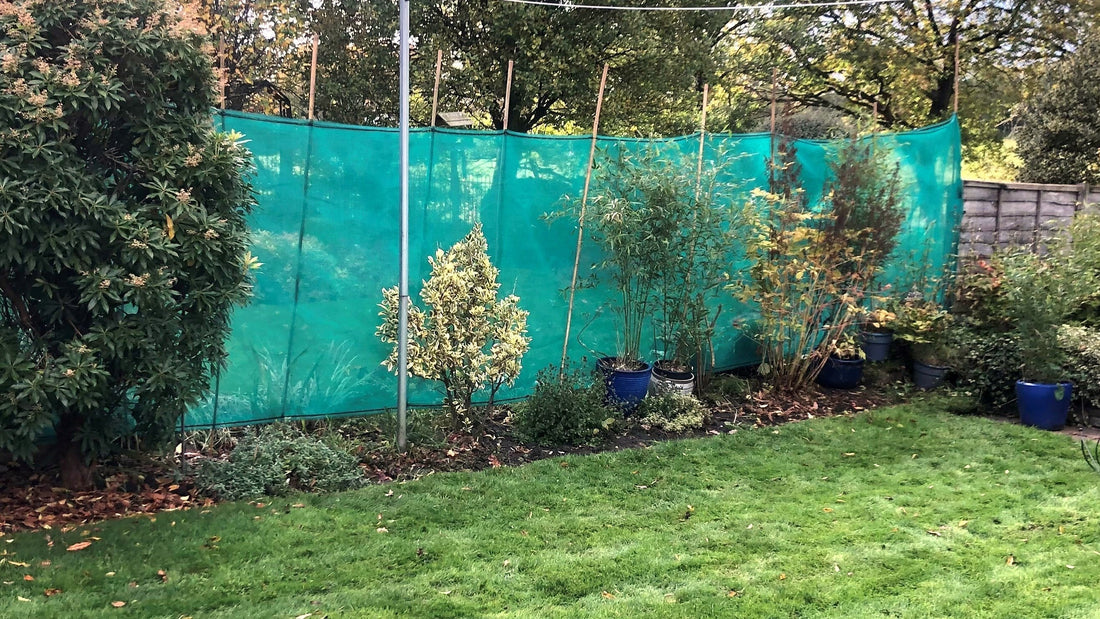
One of the most effective ways to protect your garden and polytunnel from wind damage is by installing a windbreak or shelterbelt. Rather than stopping the wind completely, a good windbreak reduces its speed and strength.
Windbreaks and shelterbelts can take several forms, including natural hedging, mesh fencing, or purpose-built screening. The key is to ensure they are semi-permeable, filtering at least 50% of the wind while still allowing some air to pass through. Solid fences and barriers are not recommended for slowing down wind speed and gusts.
The green windbreak net available from Premier Polytunnels provides 50% wind reduction and is ideal to be used as an artificial barrier to protect vulnerable plants, shrubs, and polytunnels from gales.
Placement is just as important for protecting a polytunnel. A windbreak should be positioned a short distance away from the polytunnel rather than directly against it. This allows it to slow the wind effectively before it reaches the structure, offering better overall protection.
When used correctly, windbreaks not only help prevent storm damage but can also create a more stable growing environment, reducing stress on plants and improving long-term growing conditions.
The RHS has some great advice on living windbreaks and shelterbelts, including the types to choose from, dimensions and positioning of them.
How to Protect Your Garden and Polytunnel from UK Rain and Storm Damage
With around 156 days of rain each year and numerous storms annually, UK gardeners need to be prepared for a wide range of weather conditions. While storms are unavoidable, the impact they have on your garden can be significantly reduced with the right planning and preparation.
By improving drainage, securing your polytunnel, and installing windbreaks, you can protect your growing space and keep it productive throughout the seasons. A little preparation ahead of time can go a long way in ensuring your garden continues to thrive – whatever the weather brings.

