Allotment Sizes & Growing Structures for Every Plot
Whether you’ve just joined the waiting list or you’ve been tending rows of crops for decades, one thing is clear: allotments in the UK are changing.
So what does this mean for you – and how can structures like polytunnels, cloches, and fruit cages help you get the most out of the plot you’ve got?
Introduction
Whether you’ve just joined the waiting list or you’ve been tending rows of crops for decades, one thing is clear: allotments in the UK are changing. Traditional full size plots are still treasured, especially by experienced growers who want space to produce a year’s worth of veg. But today, more and more people are discovering that smaller plots can be just as rewarding – and far more manageable around modern life’s demands.
As demand for growing space remains high, new data shows that many councils now offer smaller alloment plot options, from half plots to quarter or even “micro plots,” in response to pressure on land and long waiting lists.
So what does this mean for you – and how can structures like polytunnels, cloches, and fruit cages help you get the most out of the plot you’ve got?
Allotment Plot Sizes Today
The traditional method of measuring allotment plot sizes is in rods or poles – an old unit of land measurement dating back to Anglo-Saxon times. Historically, a rod or pole measuring 5.5 yards long was used to control a team of oxen when working the land. It was accepted that an allotment plot was 10 square rods in size (10 x 5.5 yards x 5.5 yards) as this was the space needed to grow enough vegetables to feed a family of four for one year.
Allotments today, however, are far from one size fits all:
- Traditional Full Plot: Around 250 sq metres (the classic “10 pole” size) – ideal for larger veg beds and extensive planting.
- Half Plot: Roughly 125 sq metres – a popular middle ground for gardeners who want a substantial space but not the workload of a full plot.
- Quarter Plot: Around 60 sq metres, these small allotments are sometimes carved from a larger site to fit more growers – perfect for beginners, busy gardeners, or urban dwellers.
- Micro Plot: As small as 3-8 sq metres, but also considered by some to be anything under 50 sq metres, micro allotments are designed for individuals to grow a surplus of food for themselves.
Across the UK, you’ll find plots sized all over this range – many councils are creating more manageable, smaller plots so more people can garden, connect with nature, and grow food close to home.
Biodiversity and Accessibility
The modern allotment isn’t just about rows of cabbages and carrots. A recent survey confirms councils are embedding biodiversity and accessibility into site design by allocating space for wildlife corridors, pollinator friendly planting, and raised beds for growers with limited mobility.
That means even a compact plot can support beneficial insects and wildlife, and gives allotmenteers the space to think beyond veg rows to areas where flowers, herbs, and beneficial plants coexist with their crops.
Polytunnels for Allotments
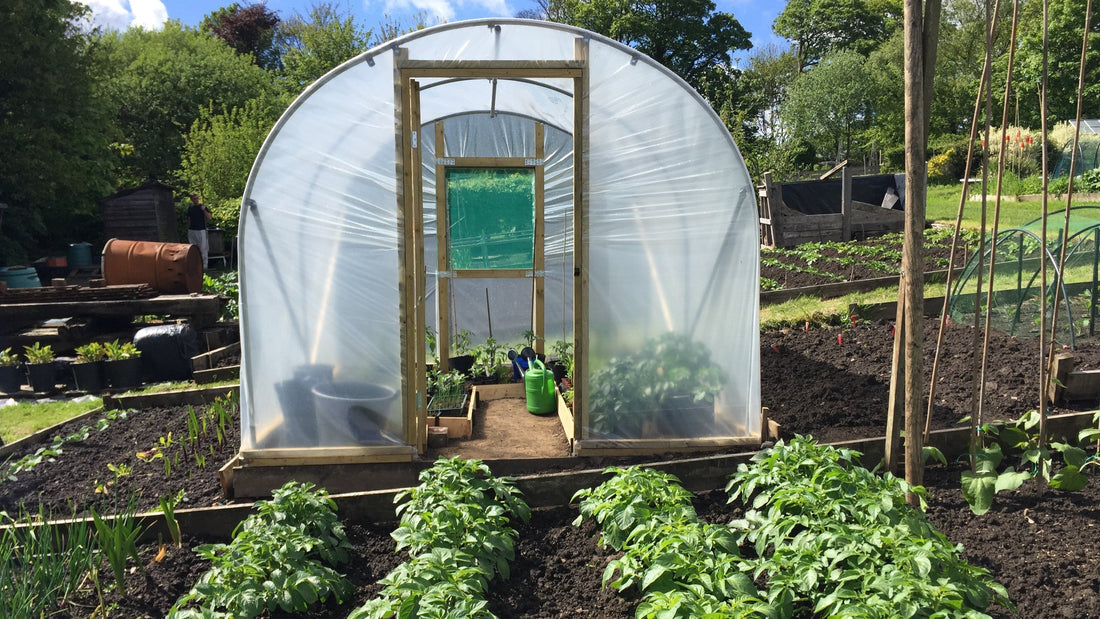
No matter the size of your plot, polytunnels are a game changer for extending your growing season and boosting productivity.
At Premier Polytunnels, we offer a range of sizes designed to suit the diversity you’ll find on allotments:
Small Polytunnels – perfect for quarter or half plot allotments:
- 6ft wide and 8ft wide polytunnels fit comfortably on small allotments without dominating your space.
- Lengths starting at 8ft and 10ft long so you choose the best polytunnel size for your plot.
Mid-Size Polytunnels – ideal for half to full plots:
- 10ft wide and 12ft wide polytunnels are spacious enough for raised beds, climbers, and even crop rotation setups.
Large Polytunnels – for full plots:
- 14ft wide to 21ft wide (and beyond) polytunnels are great for ambitious growers who want excellent growing conditions across multiple beds.
Whether you’ve got 60 sq metres or 250 sq metres to work with, there’s a polytunnel size to help you make the most of every square metre – and protect crops from frost, wind, and unpredictable weather.
Cloches – Small Plot Heroes
For quarter plots or micro allotments where a full polytunnel might be too much, cloches are incredibly useful. Ideal for raised beds and veg patches, cloches create a sheltered micro-environment that protects crops from frost damage and speeds up growth – perfect for early sowings or tender plants.
Easily moveable, cloches give you flexible control over microclimates on smaller plots – especially valuable when space is tight and every metre matters.
Fruit Cages for Allotments
Want to protect your strawberries, raspberries, and brassicas from birds and pests? Our fruit and veg cages are designed to fit neatly into smaller and larger plots alike.
Available in sizes of 2m, 4m and 6m wide, and with various lengths to choose from, a fruit and veg cage helps you keep crops safe without compromising precious growing space.
At 2m tall, these cages make it easy to walk inside and care for plants – a big plus on plots where convenience is key.
The Future of Allotments – Your Plot, Your Way
The allotment landscape is evolving – offering options to suit busy lives, biodiversity goals, and inclusive access for growers of all ages and abilities. Whether you’re starting on a tiny micro plot or managing a full sized 250 sq metre space, there are structures that help you grow more, more easily.
From polytunnels and cloches to fruit cages and flexible layout ideas, Premier Polytunnels is here to help you make every allotment size – big or small – a thriving patch of productivity.


