Loofah Growing Guide
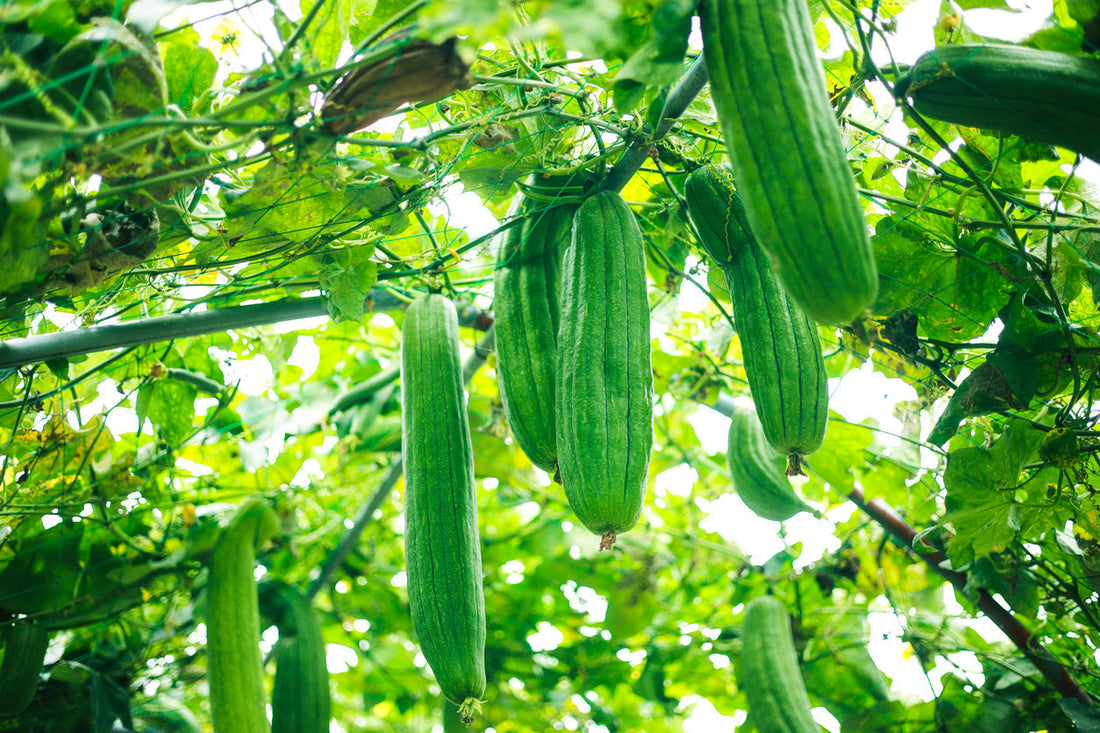
If you're on the lookout for your next garden project, look no further than the loofah. Part of the cucumber family, this zesty green fruit is tasty to eat but is probably more well-known for its cleaning capabilities.
Introduction
If you're looking for your next garden project, consider growing loofah. Part of the cucumber family, this green fruit is tasty to eat but is probably better known for its cleaning capabilities.

Many people recognize loofah as a natural shower sponge. The plant matures over several months into a coarse sponge, ideal for exfoliating and cleaning. Surprisingly, loofah is also edible and can be added to stir-fries or salads, offering a mild, slightly sweet flavour. Health benefits include:
- Rich in vitamin A to support healthy skin, hair, and vision
- High in fibre to aid digestion
- Full of antioxidants to protect cells against illness
Loofahs are traditionally grown in tropical or subtropical climates and come in two varieties: angled and smooth. Both can be used for food or as a sponge. In the UK, loofahs can be grown successfully with the right planting and care.
How to grow a loofah from seed
Sow seeds in late March or early April indoors. Soak seeds in lukewarm water for a few hours before sowing to encourage germination. Plant seeds 1.5cm deep in small pots filled with compost and keep them at 25°C using a propagator. Germination takes 7–14 days. Without a propagator, use a greenhouse, polytunnel, or sunny windowsill, rotating seedlings to prevent leaning. Once frost has passed (April–May), plants are ready to move outside.
How to plant out your loofah
Loofahs are vining plants and can reach 30 feet in length, requiring plenty of space. In the UK, plant loofahs under a polytunnel for warmth and protection. Dig a hole in well-drained, nutrient-rich soil, place the germinated plant in, cover with soil, and water thoroughly.
Caring for loofah plants
Loofah plants grow rapidly and need regular watering and nutrients. Support the vines using canes and twine, winding the plants around them to keep them secure. This ensures healthy growth and a good harvest before frost.
Protect your loofah plants
Aphids: Remove by hand or spray off with water to prevent loss of vigour and virus transmission.
Mildew: High humidity in covered spaces can cause mildew. Wash leaves each morning to remove spores and protect the plant.
Harvesting homegrown loofah

Harvest young loofah for eating when it is about the length of a pencil. Wash thoroughly before use. For sponges, allow the plant to mature fully (up to 200 days). Signs of readiness include:
- The loofah feels light
- It becomes slightly soft at top and bottom
- Colour changes from green to yellow with brown patches
To prepare a mature loofah sponge, cut it from the vine, slice from top to bottom, peel the skin, and wash in water. Save seeds for next year’s planting to continue the cycle.
Get in touch today
To grow loofah successfully in the UK, a polytunnel can provide the required space, light, and warmth for healthy growth. Browse our range of polytunnel sizes to find the right fit. For questions, contact us via email or call our team. Check our blog for more gardening tips.


